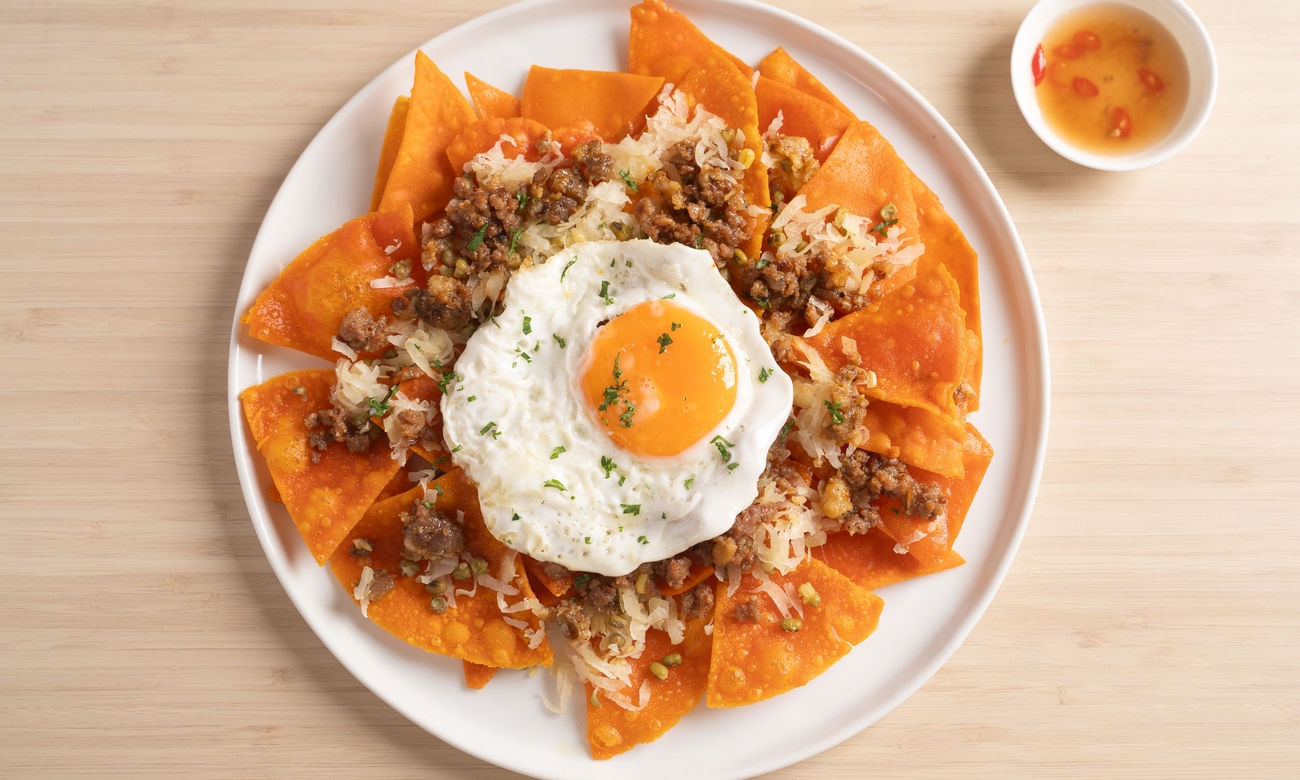

Make Ilocos empanadas at home and finally get the filling-to-shell ratio you deserve. Crispy rice flour shell, jammy egg, straight from the fryer.
What if you could make those orange-tinted snacks you see and smell from a mile away? Ilocos empanada is hard to miss and even harder to stop at just one piece. The rice flour shell fries up blistered and crisp, packed with grated green papaya, munggo, Vigan longganisa, and a whole egg that stays jammy in the center.
You can never be too sure if they're generous with the filling when you buy outside and more often than not, they're not. You get more dough than filling, and by the time you eat it, it's already cooled down. Making it at home means you eat it straight from the fryer and fill each one as generously as you want.
Cook the munggo until just tender but still holding their shape; they'll continue cooking in the fryer, so pulling them a little early is the right call. Don't skip squeezing out the liquid from the papaya after salting either. Wet filling makes the dough tear and steams the empanada from the inside instead of frying it properly.

Also known as annatto, atsuete is often thought of as just a natural coloring, but when bloomed in oil it releases a mild, earthy aroma with faint peppery notes. This same technique gives pancit palabok its iconic orange sauce and subtle savory depth, and lends kare-kare its warm hue and gentle bitterness that balances the richness of peanuts and oxtail.
Not all annatto powders are the same. The ones sold in small repacked sachets at the palengke or grocery tend to be diluted or substituted and won't give you that deep, vibrant orange the shell is known for. Look for pigmented annatto powder — Mamacita's works well for the amount used in this recipe. Just make sure you're getting achuete powder and not the achuete powder-cornstarch mix, which is a different product. If the dough looks more yellow than orange or a pale peach color after mixing, your annatto powder is too weak.
If the dough is cracking when you flatten it, it's likely not hydrated or rested enough. Add water a tablespoon at a time and let it rest for another 5 to 10 minutes. To test, press a ball of dough flat on your palm. If the edges are smooth without cracking, it's ready.
Boil munggo: Rinse the munggo seeds and place them in a small pot. Cover with water by about 2 inches and bring to a boil over high heat. Reduce to a simmer and cook for 15 to 20 minutes, until the beans are just tender but still holding their shape. Drain and set aside.
Prepare papaya: Peel and grate the green papaya on the large holes of a box grater. Toss with a pinch of salt and let it sit for 5 minutes, then squeeze out as much liquid as you can with your hands or a clean towel.
Season filling: Combine the drained munggo and squeezed papaya in a bowl. Season with the chicken bouillon powder and mix to combine. Taste and adjust salt if needed.
Make dough: Combine the hot water, annatto powder, chicken bouillon powder, and salt in a cup and stir until dissolved. Place the rice flour in a bowl and make a well in the center. Pour in the water mixture and the oil, then mix until a soft dough forms. It should be pliable but not sticky. Cover and let it rest for 10 minutes.
Fry longganisa: Remove the casings and slice or crumble the Vigan longganisa into small pieces. Cook in a pan over medium heat until browned and the fat has rendered, about 5 to 7 minutes. Set aside.
Assemble: Divide dough into 4 equal portions. Lay a sheet of plastic (cut from a large ziplock bag) on your work surface. Take one portion and dip it into oil before placing it on the plastic. Lay another sheet over it and press flat with a pan or your palm into a roughly 6-inch circle. Peel back the top sheet. Spoon around a tablespoon of the papaya-munggo filling onto one half of the dough, add a few pieces of longganisa, then crack a raw egg directly on top.Use the plastic to fold the dough over the filling and press the edges to seal. Press the rim of a plate down to trim it into a clean half-moon shape. Repeat with the remaining portions.
Fry empanada: Heat about 2 to 3 inches of oil in a deep pan or wok over medium-high heat until it reaches around 350°F (175°C) or when a chopstick bubbles when put in. Gently slide in the empanadas one or two at a time. Fry for 3 to 4 minutes per side until the shell is deep orange and set firm. Drain on a wire rack or paper towels and serve immediately with spiced vinegar or ketchup.