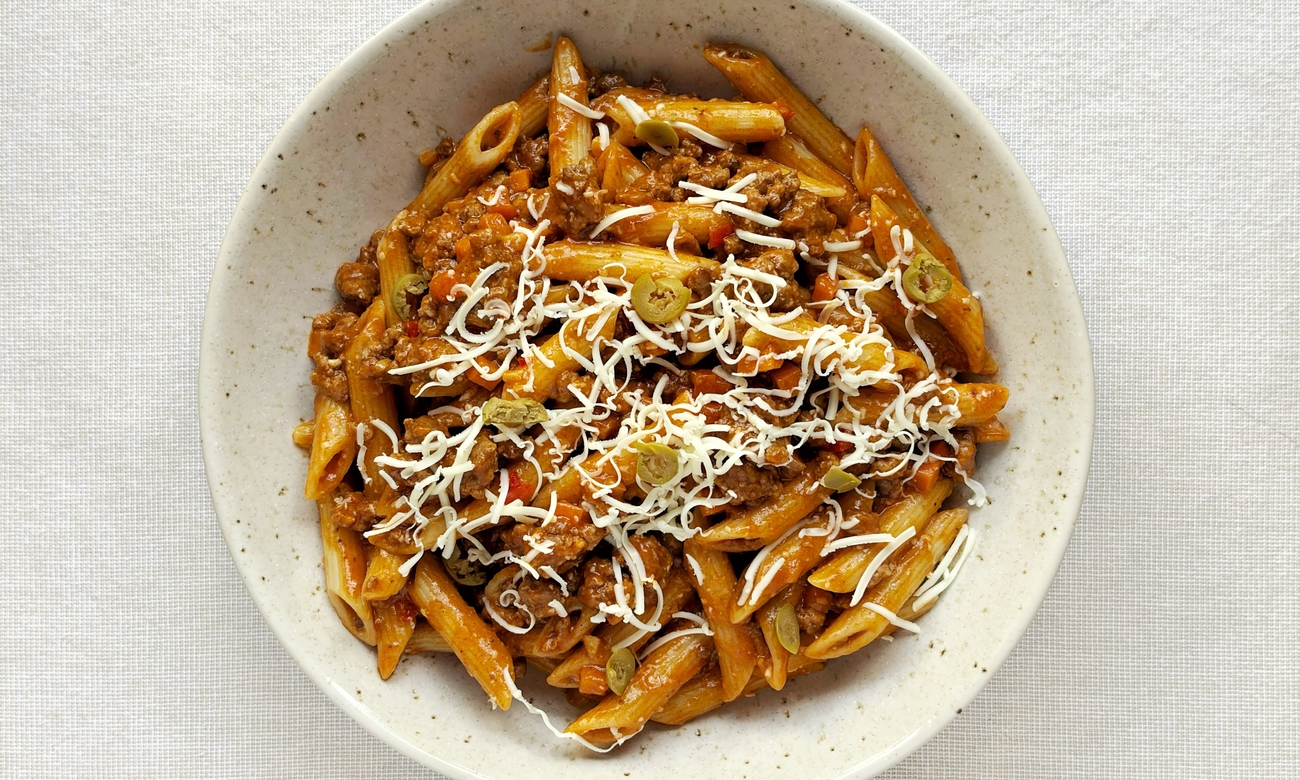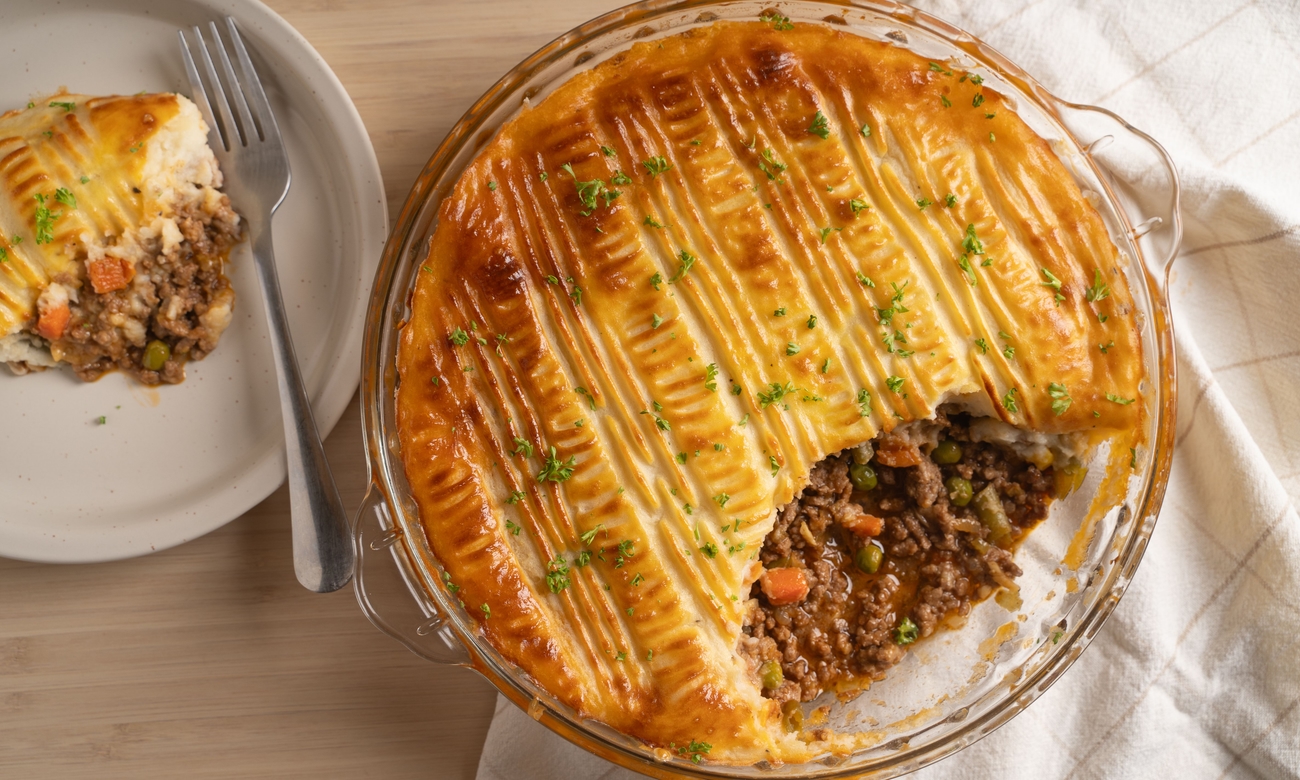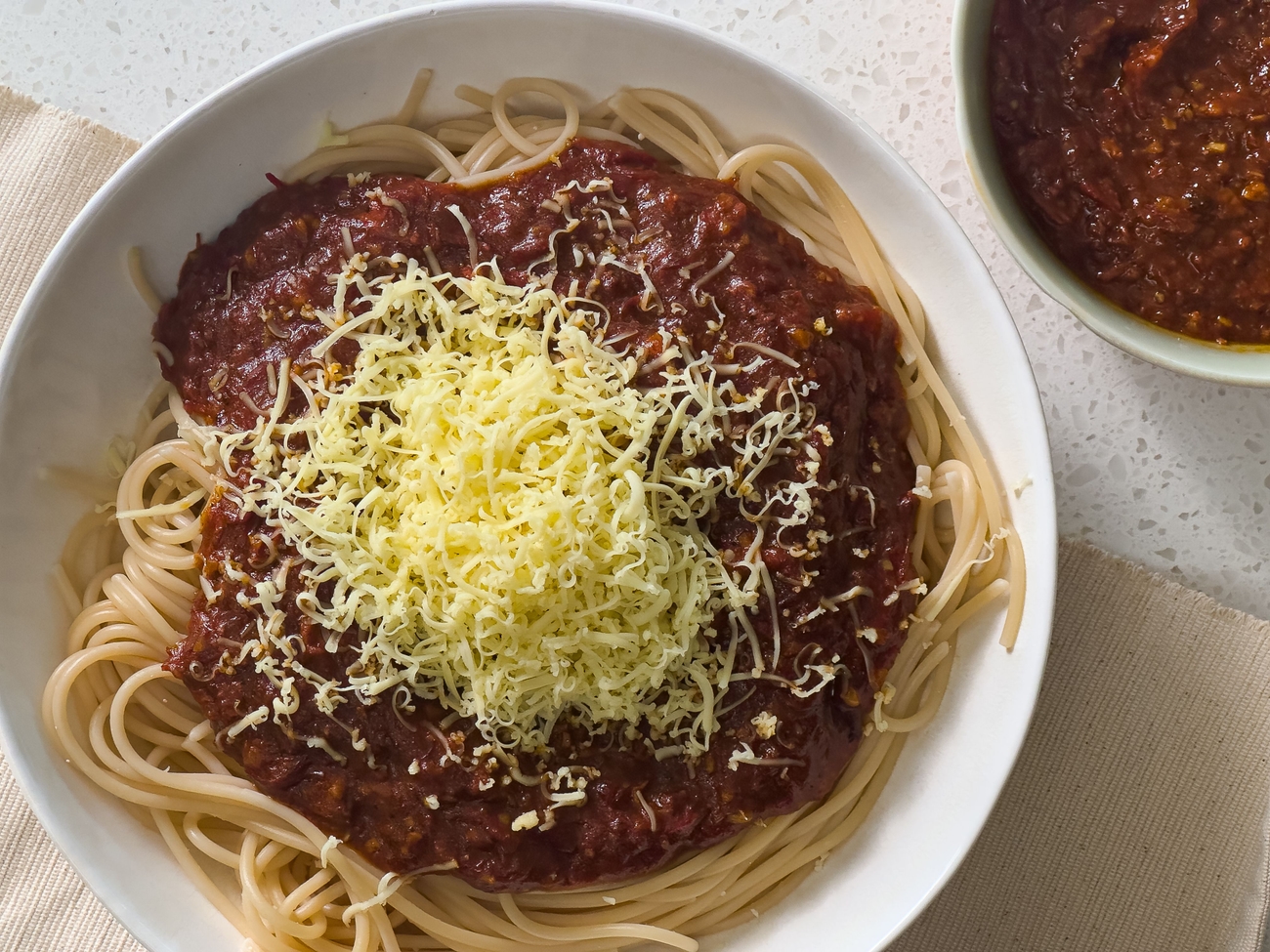

This is the corned beef swap from our spaghetti recipe taken one step further. Same idea — canned corned beef in place of ground beef — but built into a full lasagna.
One step worth noting is the sugar in the meat sauce. Corned beef is more acidic than ground beef, and too much acid will make the béchamel taste sour. The sugar tones it down and keeps the layers from clashing.
The béchamel is straightforward but needs attention. Add the milk gradually and keep stirring — pour it all in at once and you'll get lumps. The roux also shouldn't brown; keep the heat at medium and pull it off if it starts to color.
What makes lasagna worth the effort is how the sheets work. They're bland on their own, which is the point — each bite pauses the flavor just long enough that you taste the meat sauce, the béchamel, and the cheese separately before it all comes together.
Let the lasagna rest for at least 10 minutes after it comes out of the oven. Cut into it too early and the layers won't hold.


We don't just copy random recipes. We taste test every single one.

Easily search and save your favorites.

Chefs develop our food with techniques made easy for home cooks.
Corned beef lasagna takes the corned beef swap from our spaghetti recipe one step further — canned corned beef in place of ground beef, built into a full lasagna.
Sauté aromatics: Heat neutral oil in a medium saucepan over medium heat. Sauté onion until softened and translucent, about 1 minute. Add garlic and cook until fragrant, about 30 seconds
Brown corned beef: Add corned beef and cook, breaking it up as you go, until browned and the fat has rendered, about 5 minutes.
Add tomato paste: Add tomato paste and stir into the meat. Cook until it darkens and reduces slightly, about 4-5 minutes. This removes the raw, tinny taste.
Simmer the sauce: Pour in tomato sauce and water. Stir well and bring to a simmer. Add brown sugar and season with salt and pepper. Simmer uncovered until the sauce has thickened, about 10 minutes. Set aside.
Make roux: Melt butter in a medium pot over medium heat. Add flour and stir continuously until combined into a smooth paste, about 1–2 minutes. Don't let it brown — pull the pot off the heat if it starts to color.
Build sauce: Add milk gradually while whisking constantly until fully incorporated. Once all the milk is in, the sauce should be smooth and thick enough to coat the back of a spoon. Season with salt and pepper. Set aside.
Boil the lasagna sheets: Bring a large pot of salted water to a boil. Cook lasagna sheets until just shy of al dente — slightly underdone, since they'll continue cooking in the oven. Drain and set aside.
Layer lasagna: Spread a thin layer of meat sauce and béchamel on the bottom of a medium baking dish. Add a layer of lasagna sheets, then spread about ⅓ cup of meat sauce and ⅓ cup of béchamel evenly over the sheets, and sprinkle with cheese. Repeat until the dish is almost full, just below the rim. For the final layer, cover the top with béchamel and sprinkle generously with the remaining cheese.
Bake: Bake in a preheated oven at 220°C (430°F) for 10–15 minutes, until the cheese has melted and browned at the edges.
Rest: Remove from the oven and let rest for at least 10 minutes before cutting. The layers need time to set — cut too early and everything slides.