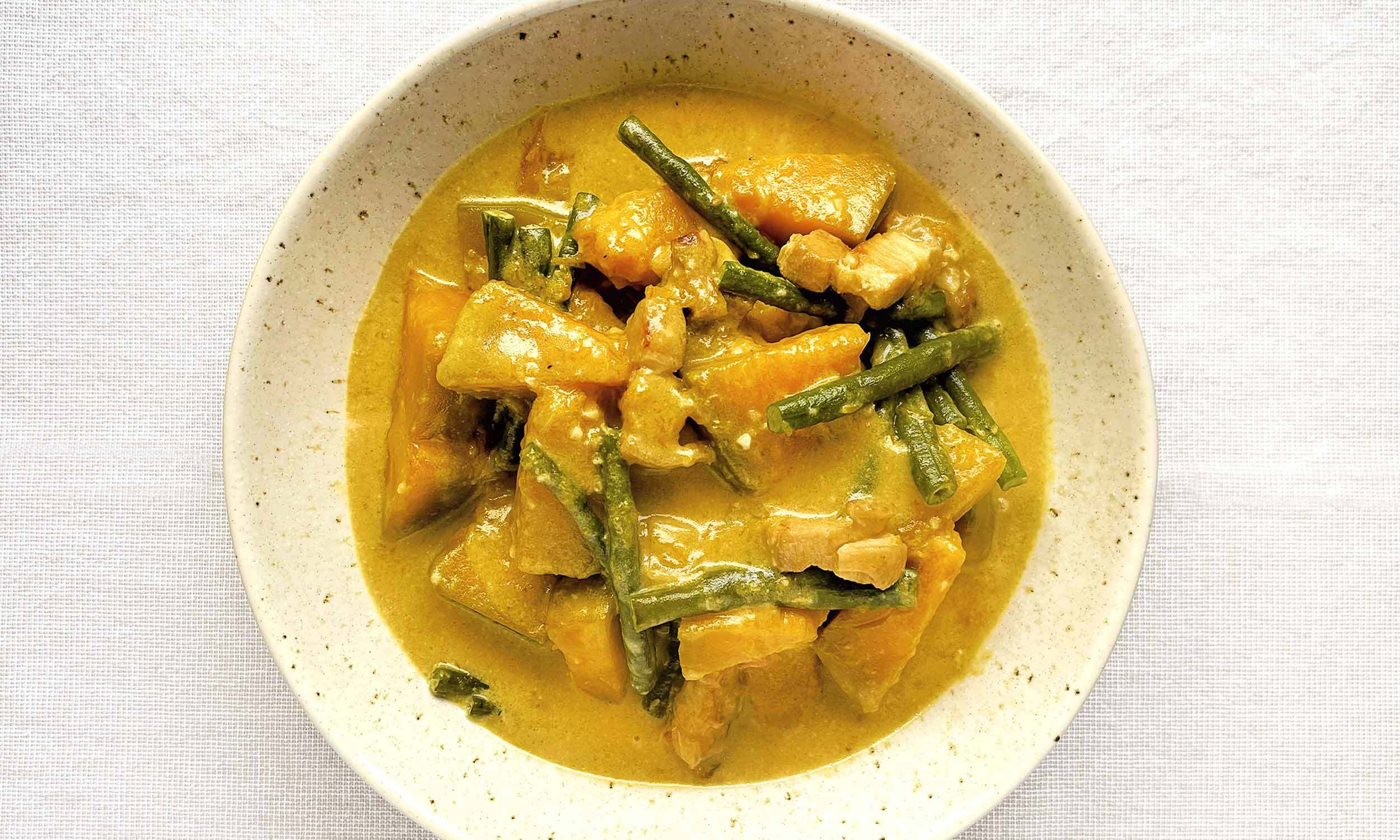

A vegetarian take on Bicol Express — crumbled tokwa fried crispy, then tossed in coconut milk, bagoong, and chili.
Bicol Express is a Bicolano stew of pork, coconut milk, and chili — one of the more well-known dishes to come out of the region, mostly because it delivers on all the things people love: rich, savory, and genuinely spicy if you want it to be. This version swaps the pork for tokwa, or firm tofu.

Bicol Express is a spicy Filipino stew made with two signature ingredients of Bicol cuisine: fiery-hot chilies and creamy coconut milk. Cely Kalaw, who is widely credited for inventing and popularizing the dish, named it after the old railway connecting Manila and Albay.
Tokwa is sold in most wet markets and grocery stores, usually in small square blocks. Extra-firm is what you want here — it holds its shape and crisps up better than the softer varieties. Instead of dicing it, you crumble it into rough, pea-sized pieces. The irregular surface area means more edges to crisp up and more nooks for the sauce to cling to later. Before crumbling, press the tokwa for 20–30 minutes: the drier it is going in, the better it browns.
Coating the crumbled tokwa in cornstarch before frying gives it a light, crispy shell that stays intact even after it goes into the sauce. Skip it and the tokwa tends to go soft quickly.
For the base, the coconut milk needs to simmer low and slow — around 8–10 minutes until it thickens slightly and turns glossy. Don't rush this with high heat. Coconut milk breaks easily when boiled, and a broken sauce is greasy and grainy rather than creamy. You'll know it's ready when it coats the back of a spoon.
The bagoong here is alamang, or shrimp paste, which is the more common choice for Bicol Express. It's salty and funky, so taste before you add patis at the end — you may need less than you think.


We don't just copy random recipes. We taste test every single one.

Easily search and save your favorites.

Chefs develop our food with techniques made easy for home cooks.
Sitaw is the default vegetable, but sigarilyas works just as well if that's what you have. Keep the pieces at about an inch so they cook evenly. For heat, the siling haba adds mild, grassy warmth and the siling labuyo on top is more of an invitation — eat around it for a gentler dish, or crush it in if you want the full heat.