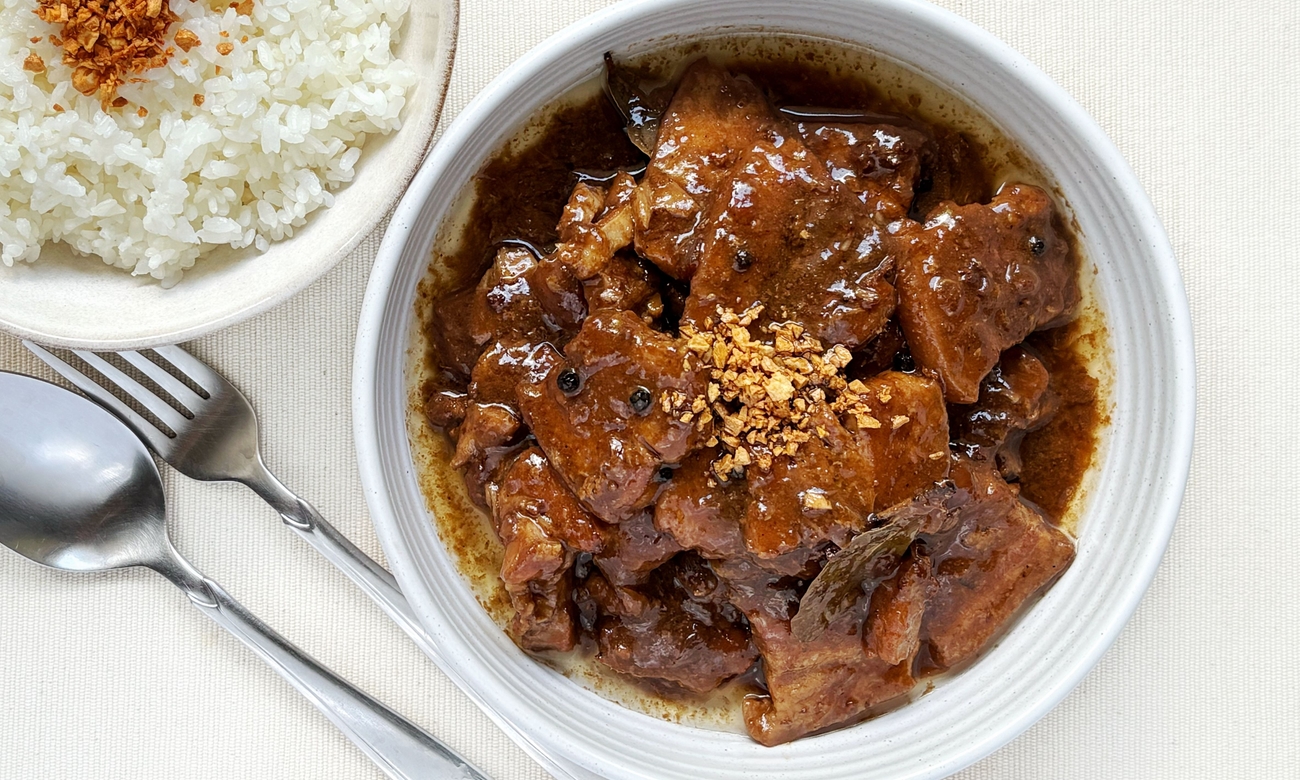

Monggo is a hearty Filipino mung bean stew. This version adds pork belly for a meatier flavor and chicharon for crunch against the soft beans.
This dish builds on the classic monggo by adding the ingredient Filipinos love most: pork. Pork belly adds a savory, meaty depth to the broth and makes the stew more satisfying than the meatless version.
One thing that matters here: render the fat from the pork belly before anything else goes in. That fat carries flavor through the whole dish. And browning the meat (not just cooking it through) gives the pork itself a deeper, more savory taste.
This version still keeps close to the original—just a few ingredients, one pot, easy to make. The chicharon on top is the finishing touch, a little crunch on an otherwise soft, filling bowl.
Sauté aromatics: Heat neutral oil in a medium pot over medium heat. Sauté onion until soft and translucent, about 3 minutes. Add garlic and cook until fragrant, about 30 seconds. Be careful not to brown the garlic—it turns bitter quickly.
Brown pork: Add pork belly and sauté until the edges are lightly browned and some fat has rendered, about 4–5 minutes.
Add monggo: Add mung beans and stir to coat in the aromatics and pork fat. Add pork broth and scrape up anything stuck to the bottom of the pot. Bring to a boil over high heat.
Simmer: Reduce heat to medium-low, cover, and simmer for 25–30 minutes, stirring every 10 minutes to keep the beans from sticking. The monggo is ready when the beans have split open and are completely soft—no chalky center. If the stew thickens too much before the beans finish cooking, add water a ladleful at a time.
Add spinach: Uncover and stir in spinach leaves. Cook until just wilted, about 1 minute. Season with salt and pepper.
Serve: Ladle into bowls and top with broken chicharon. Serve hot with steamed rice. Eat while the chicharon still has some snap.