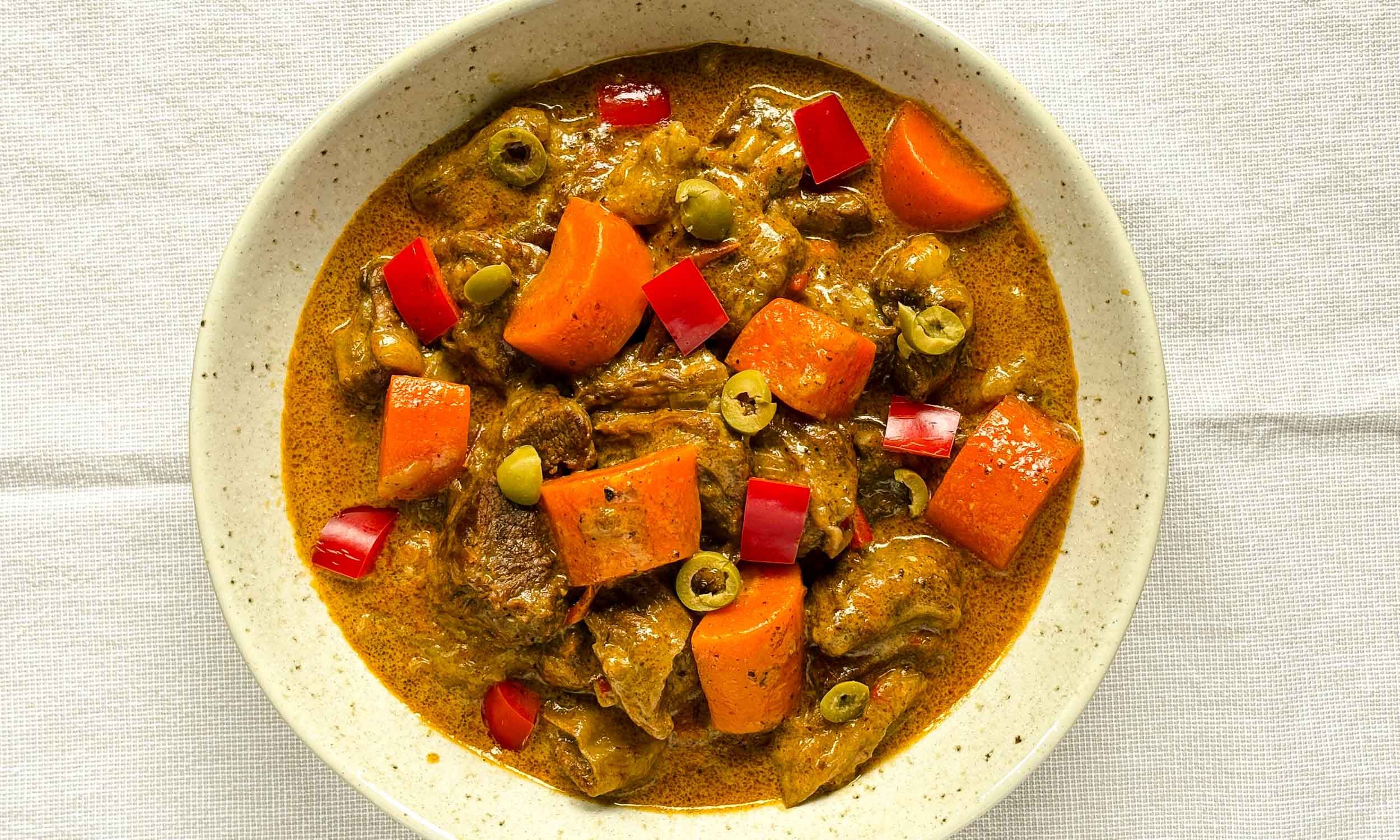

Kare kare is usually a labor of love — oxtail and beef tripe simmered low and slow until tender, in a peanut sauce that takes time to build. This version trades the long braise for ground beef, so you get that same rich, nutty sauce in a fraction of the time, without sacrificing the flavor that makes kare kare kare kare.
A few shortcuts make it even more doable on a weeknight: toasting the rice flour first — instead of making a roux — deepens the sauce with a nutty aroma and thickens it without extra steps, atsuete powder stands in for atsuete oil so there's no need to infuse the oil yourself, and bagoong guisado does double duty as a seasoning shortcut, already sautéed and ready to stir in. Just make sure to use unsweetened peanut butter — the sweetened kind throws off the balance, since kare kare should read savory with just a whisper of sweetness underneath, not the other way around.
Browning the ground beef properly (letting it sit undisturbed before breaking it up) builds a deeper base for the sauce, the same way browning oxtail would in the traditional version. Serve with rice and a side of bagoong, same as always.
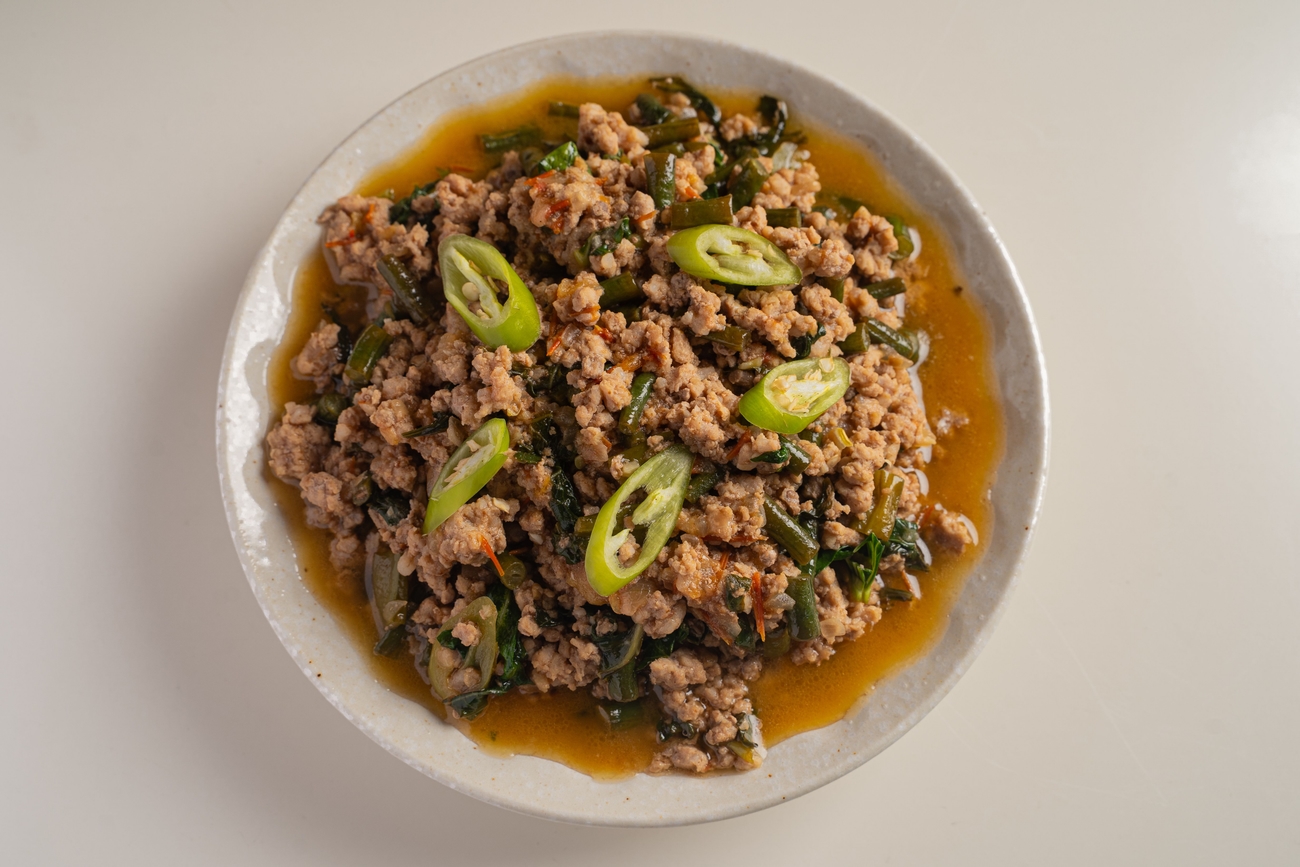
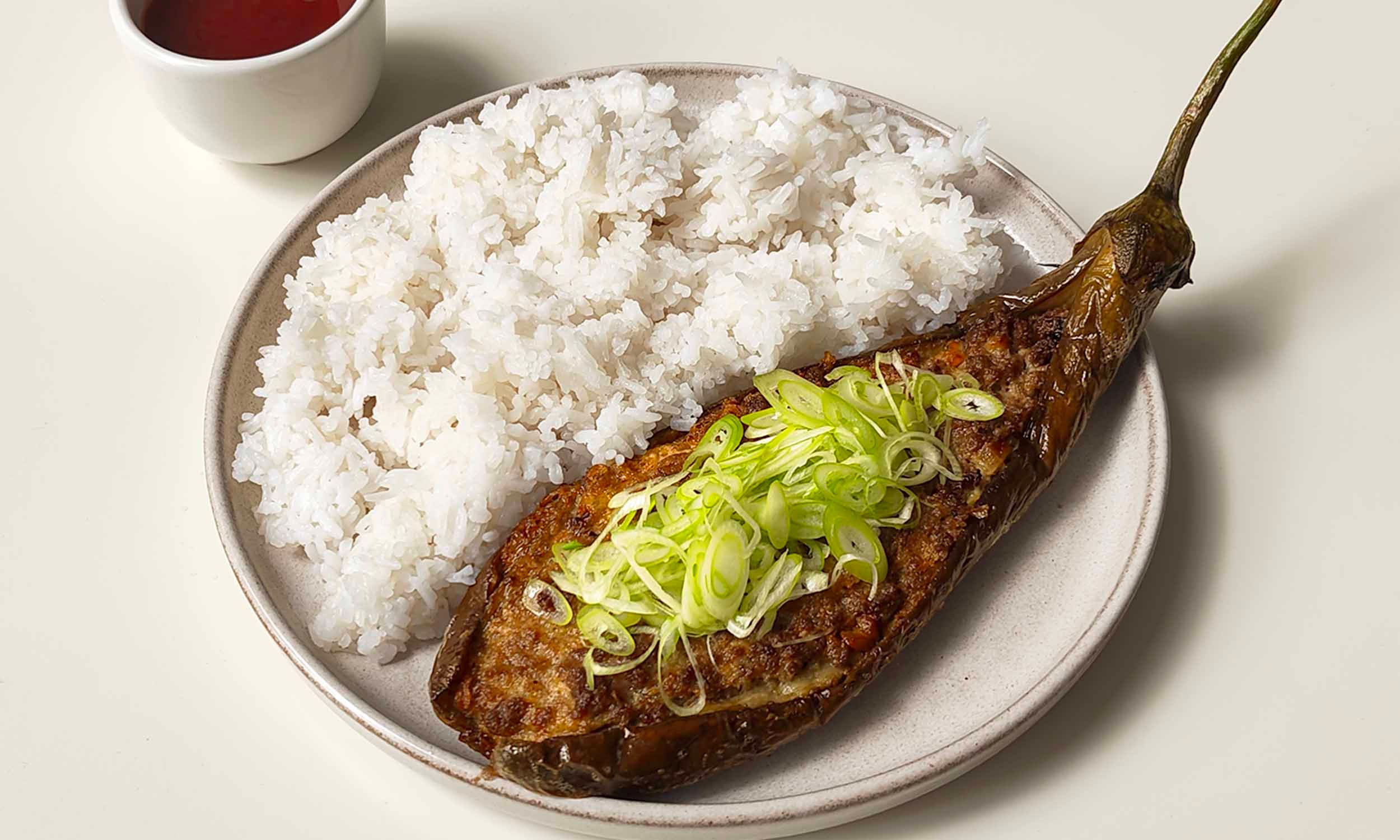

A quicker, more affordable take on kare kare using ground beef instead of oxtail and tripe.
Toast flour: In a dry pan over medium heat, toast the rice flour, stirring constantly, until light golden and nutty-smelling, 3-4 minutes. Set aside.
Build base: Heat oil in a large, heavy-bottomed pot over medium heat. Stir in atsuete powder until the oil turns a deep orange-red. Sauté onion until soft and translucent, about 3 minutes. Add garlic and cook until fragrant, about 30 seconds.
Brown beef: Add ground beef, breaking it up with a spoon. Let it sit undisturbed for a minute to allow the bottom to brown before stirring, then continue cooking until no longer pink and starting to render fat, 5-6 minutes.
Thicken sauce: Stir in the toasted rice flour until the beef is evenly coated. Add water and beef cube, stirring to prevent lumps, then bring to a simmer.
Add peanut butter: Whisk in peanut butter until fully dissolved. Simmer, stirring occasionally, until the sauce thickens enough to coat the back of a spoon, 8-10 minutes.
Season: Stir in bagoong guisado and patis, if using. Taste — the sauce should read savory with a light sweetness underneath, not sugary. Add more bagoong if it needs salt.
Add vegetables: Add eggplant and simmer until just tender, 3-4 minutes. Add string beans, cooking until bright green and crisp-tender, 3-4 minutes more. Add pechay last and cook just until wilted, 1-2 minutes — it turns limp fast if left too long.
Serve: Ladle into bowls and serve hot with rice and extra bagoong guisado on the side for spooning on top.