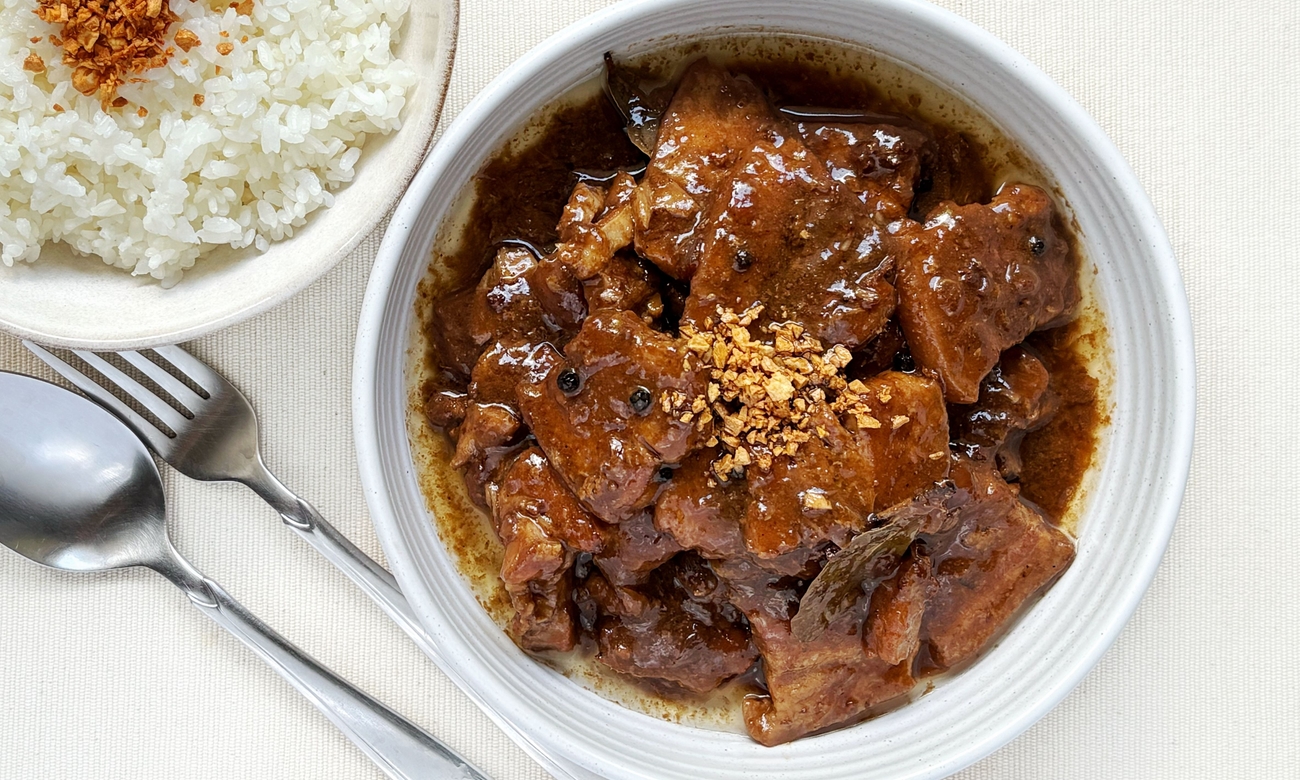

What happens when bagoong stops being a condiment and starts being the star? This. Pork belly braised in bagoong and honey — funky, savory, and built for extra servings of rice.
Bagoong alamang has been typecast. It shows up as a sidekick, a small dish of it next to kare-kare, a spoonful over green mangoes, and then it's done. But give it the lead role and it completely changes the dish. Here, it's the braising base: salty, funky, and deeply savory in a way that no amount of soy sauce can replicate. Honey keeps it balanced, fish sauce pulls out a longer, rounder flavor, and the pork belly spends an hour in all of it until the fat renders and the sauce coats every piece. This dish lands somewhere between Chinese red-braised pork and binagoongan, but with its own thing going on and goes dangerously well with rice.
For the bagoong, ginisang bagoong (the pre-sautéed jarred kind) works best since it's already cooked down and less harsh. Raw bagoong can work too, but the flavor will be sharper — balance it with a touch more honey. Not sure which bagoong to grab at the grocery? Check out our bagoong tier list to find the best one for your pantry. Same goes for honey! Not all of them behave the same way in cooking, so our honey tier list is worth a read before you shop.
Marinate pork: Place pork belly in a ziplock bag and pour in the fish sauce. Seal and refrigerate for at least 1 hour, or overnight if you have time.
Cut and brown pork: Remove pork from the marinade and cut into 1 to 2-inch pieces and pat dry. Heat 2 tbsp neutral oil in a wok or large pan over medium-high heat. Sear the pork in a single layer until deep golden brown on all sides, about 3 to 4 minutes per side. Set pork aside.
Build sauce: Reduce heat to medium. In the same pan, add the garlic and cook until lightly golden and fragrant, about 1 minute. Add the bagoong, honey, soy sauce, and ½ cup of water. Stir to combine, scraping up any browned bits from the bottom of the pan.
Braise: Return the pork belly to the pan and toss to coat all sides with the sauce. Add the bay leaves and a few cracks of black pepper. Reduce heat to medium-low and cover for 1 hour. Over the course of the hour-long braise, add the remaining 1 cup of water in ½ cup increments whenever the liquid gets low, keeping the pork mostly submerged. In the last 15 to 20 minutes, leave the pan uncovered and let the sauce reduce and thicken.
Season and serve: Taste and adjust with a pinch of salt or bagoong if needed. Serve over steamed rice.