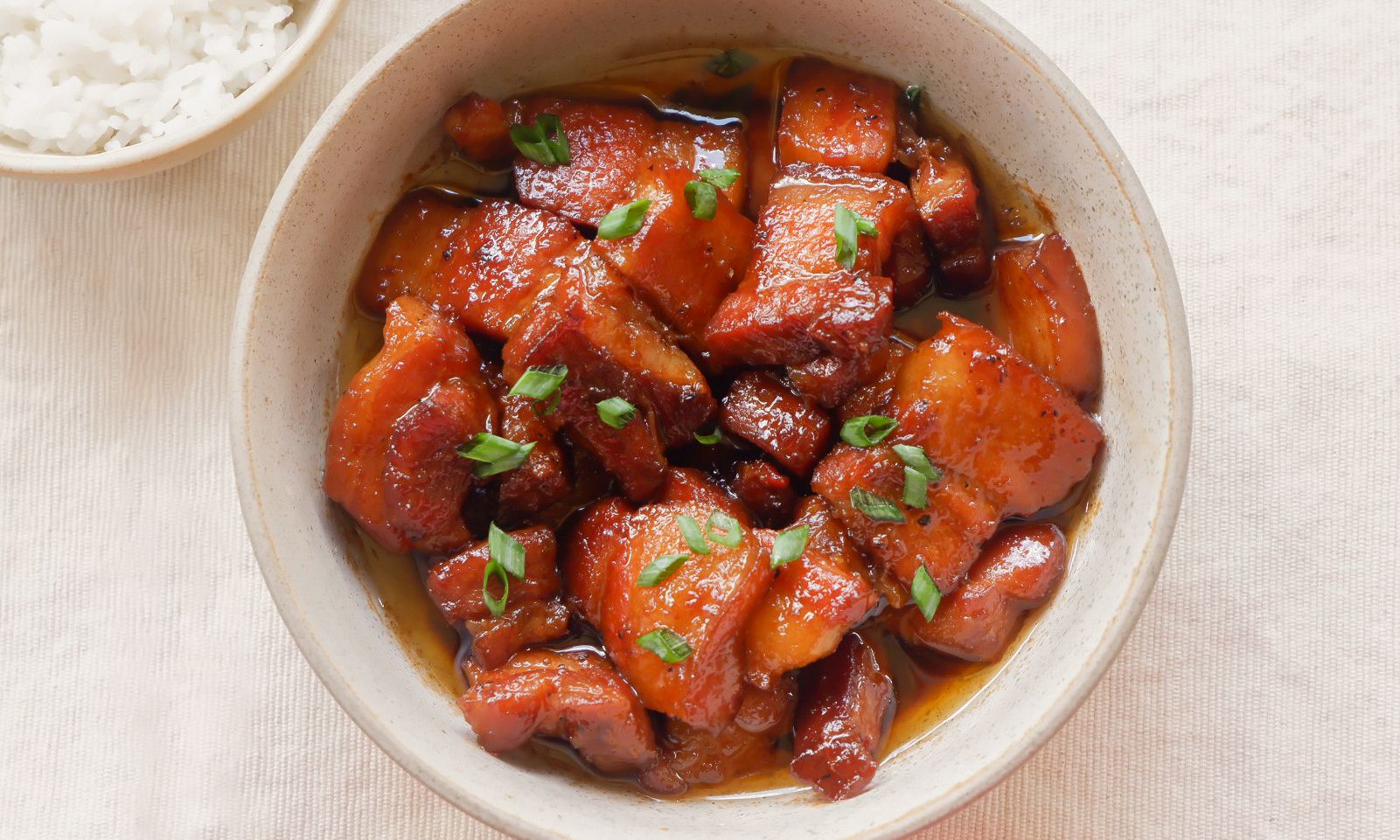

A comforting pork adobo of melt-in-your-mouth pork belly in a glossy annatto sauce, savory, slightly sweet, and made for spooning over rice.
Over time, the combination of fat-rendered pork, sautéed aromatics, and annatto-infused oil became a recognizable regional expression of adobo, which is why pork adobo sa atsuete is now most often linked back to Cavite and Batangas, even as other local variations, like Batangas adobo sa dilaw, showcase different approaches to color and flavor.
Pork adobo sa atsuete is a twist on the classic pork adobo built on annatto-infused oil, sautéed aromatics, and pork belly braised in soy sauce and vinegar until tender. A touch of brown sugar balances it out, making it the kind of dish that calls for a second (and perhaps a third) heaping of rice.

Also known as annatto, atsuete is often thought of as just a natural coloring, but when bloomed in oil it releases a mild, earthy aroma with faint peppery notes. This same technique gives pancit palabok its iconic orange sauce and subtle savory depth, and lends kare-kare its warm hue and gentle bitterness that balances the richness of peanuts and oxtail.
Because atsuete is fat-soluble, it blooms best in oil and rendered pork fat, much like how it’s used in chicken inasal, also why pork belly is the best protein for this dish. As the pork sears and slowly renders, its fat carries the annatto’s color and flavor evenly through the sauce, creating a richer, glossier adobo with more depth.
Lean cuts can work, but they won’t give the same rounded mouthfeel or vibrant color that pork belly naturally provides.
You might’ve heard the rule about not stirring once the vinegar goes in. It’s often treated like a myth, but there’s a simple reason behind it.
Letting the vinegar cook undisturbed for a minute helps mellow out its sharp, raw bite before it marries into the dish. If you stir right away, the vinegar can taste harsher and more forward; not necessarily wrong, just a little aggressive.
So no, stirring won’t ruin your adobo. Giving the vinegar a brief moment on its own simply leads to a smoother, better-balanced stew.
Make atsuete oil : Heat oil over medium heat in a large pan. Add atsuete seeds or powder then cook until fragrant and oil turns bright orange, about 3-4 minutes. If using seeds, remove atsuete seeds and discard.
Saute aromatics: In the same pan, with the atsuete oil, sauté garlic and onions until softened, about 2-3 minutes.
Brown pork: Add pork belly and sear, stirring occasionally, until lightly browned and fat has rendered, about 8-10 minutes.
Bloom aromatics and spices: Add bay leaves and pepper. Cook for about 2 minutes, stirring gently, until fragrant.
Add soy sauce and vinegar: Add soy sauce and vinegar. Let the mixture cook undisturbed for about 1 minute to allow the vinegar to mellow—do not stir.
Simmer pork: Add water and bring to a boil. Once boiling, reduce heat to medium-low, cover, and simmer for about 45 minutes, or until the pork is tender. Check halfway through and add about ½ cup of water if the pot looks too dry.
Sweeten and reduce: Once pork is tender, increase heat to medium. Stir in brown sugar and simmer, uncovered, until the sauce reduces to your desired consistency, about 8-10 minutes.
Season and serve: Taste and adjust with salt and pepper as needed. Transfer to a serving bowl and serve with steamed rice.